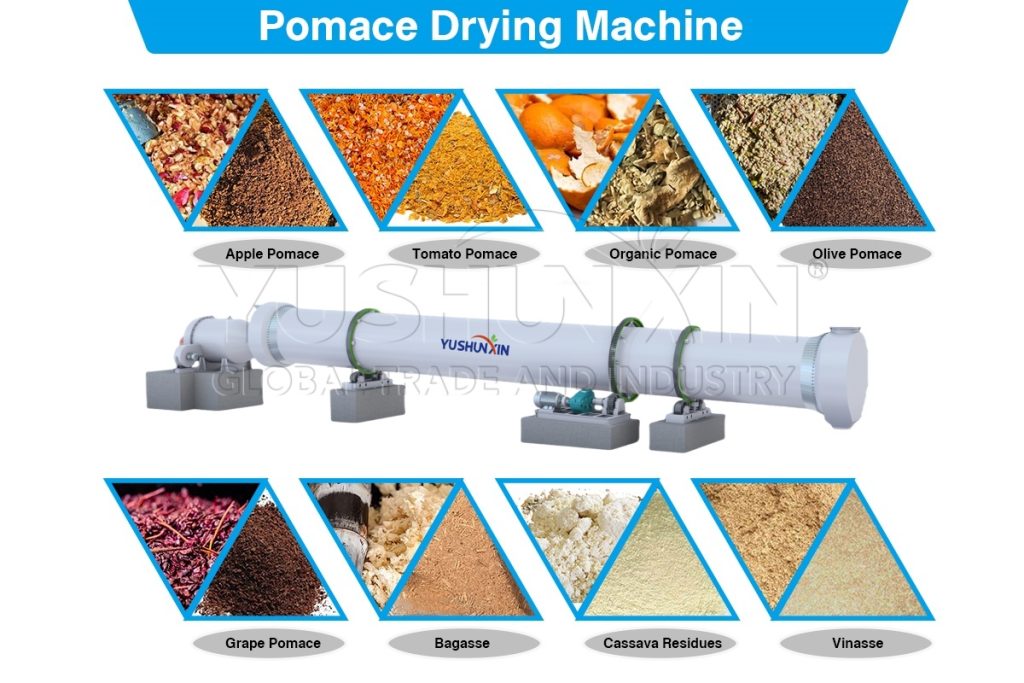
In the field of organic fertilizer production, industries often encounter significant challenges with raw materials containing high moisture content. Typical examples include fruit pomace from apple, grape, citrus, or pineapple juice processing, as well as vegetable pomace from tomato, carrot, or spinach production. These pomace materials, rich in nutrients and fiber, are highly suitable for organic fertilizer manufacturing, yet their initial moisture levels commonly exceed 80–90%. Besides fruit and vegetable pomace, dairy sludge, brewery waste, and animal manure also fall into this category of wet organic waste. Each industry faces unique requirements: fruit and vegetable processors need efficient pomace drying to prevent spoilage and reduce transportation costs, while livestock and brewery operations prioritize rapid water reduction to facilitate composting and pelletizing. By addressing these specific needs, companies can not only convert waste into valuable fertilizer particles but also optimize their production systems for greater efficiency.
How Does Moisture Reduction Improve the Pomace Fertilizer Granulation Process?
Proper water reduction stands as the cornerstone of high-quality fertilizer granulation, especially when working with pomace-based raw materials. If the moisture content remains too high during the granulation stage, the resulting fertilizer pellets or granules may lack structural integrity, leading to dusting, caking, or premature decomposition. Therefore, a well-designed water removal procedure, involving staged dehydration, becomes essential. The typical sequence begins with mechanical dewatering equipment, which reduces the bulk water and brings moisture down from above 90% to around 60–70%. Next, composting machinery further breaks down the pomace and lowers water content to roughly 40–50%. Wet granulation equipment then shapes the partially dried organic material into granules or pellets, but the final product may still contain 20–30% water. At this point, specialized pomace drying machines perform the crucial task of reducing residual moisture to below 10%, ensuring that the finished fertilizer granules meet market standards and offer improved shelf life, flowability, and application performance.
What Features Should You Look For in Advanced Pomace Dryer Machines to Enhance Granulation Quality?
Selecting the right pomace dryer directly improves the overall fertilizer granulation process. High-efficiency pomace dryers feature optimized airflow design, intelligent temperature control systems, and modular construction to handle varying feedstock types and volumes. These advanced machines can adapt to the unique properties of apple pomace, grape skin residues, or other high-moisture organic wastes, providing uniform drying without scorching or nutrient loss. In combination with reliable dewatering machines, compost turners, and wet granulators, a top-tier pomace drying system ensures that the fertilizer production procedure consistently yields high-quality pellets or granules. Additionally, energy-efficient drying technology significantly reduces operational costs while supporting sustainable manufacturing goals. By integrating advanced pomace dryers with other essential production machinery, companies gain the flexibility to process different types of pomace, achieve target moisture levels precisely, and maximize output quality.
How Can Upgrading Pomace Drying Technology Benefit Your Fertilizer Production Procedure?
Investing in innovative pomace drying equipment transforms the entire fertilizer granulation and production process. When manufacturers achieve precise and rapid moisture reduction, pomace-based fertilizer particles exhibit better hardness, uniform size, and improved physical properties. The combination of dewatering, composting, granulating, and drying stages enables producers to convert wet waste into stable, market-ready organic fertilizer pellets. This comprehensive system not only enhances product quality but also increases overall production efficiency and reduces environmental impact. For organizations seeking to upgrade their fertilizer making technology, collaboration with a professional drying equipment manufacturer such as Yushunxin can deliver advanced pomace dryer solutions tailored to a specific production process, helping you maximize the value of high-moisture organic waste and achieve superior granulation results.
Conclusion
The journey from wet pomace to high-quality organic fertilizer granules relies on a well-orchestrated process of water reduction and pellet making. Whether the raw material comes from fruit juice, vegetable processing, or other organic waste streams, advanced pomace drying equipment plays a pivotal role in stabilizing fertilizers and enhancing granulation quality. By carefully selecting suitable machinery for each stage—dewatering, composting, wet granulating, and final drying—producers can overcome the technical challenges of high-moisture pomace and achieve consistent results. Industry leaders such as Yushunxin offer state-of-the-art pomace dryer machines and comprehensive support for fertilizer production, ensuring that every granule or pellet meets the highest standards of performance and sustainability. You can visit: https://www.fertilizerdryer.com/pomace-drying-machine/