Introduction
Cow dung is one of the most cost-effective and nutrient-rich raw materials for producing organic biofertilizers. Whether you’re planning a small farm-based operation or aiming to launch a commercial-scale production line, selecting the right plant scale is critical. This blog compares small cow dung plants and 10 t/h biofertilizer production lines, helping you decide which setup aligns with your business goals.
1. Target Users and Application Scenarios
- Small Cow Dung Plant (1–3 t/h):
- Ideal for farmers, cooperatives, or rural entrepreneurs
- Focuses on self-use or local sales
- Simple processing and easy to manage
- Large Plant (10 t/h):
- Designed for commercial producers and organic fertilizer exporters
- Supplies regional distributors or bulk clients
- Integrated production line with high efficiency
Tip: Start small if you’re testing the market; go large if you have reliable sales channels. YUSHUNXIN can provide you with cow dung biofertilizer equipment of different outputs.
2. Equipment Configuration and Plant Layout
- Small Setup:
- Basic units: compost turner, crusher, mixer, disc granulator, drying & packing
- Occupied area: 800–1,500 m²
- Investment: $25,000–$70,000
- 10 t/h Production Line:
- Full configuration: windrow compost system or fermentation tank, crushing-mixing unit, rotary drum granulator, dryer & cooler, screening, and automatic packaging line
- Occupied area: 3,000–5,000 m²
- Investment: $150,000–$300,000
Keyword Insight: Most “organic fertilizer startup guides” suggest modular designs for small plants and automated lines for large ones. Click here to get the cost and equipment of cattle manure biofetilizer plant.
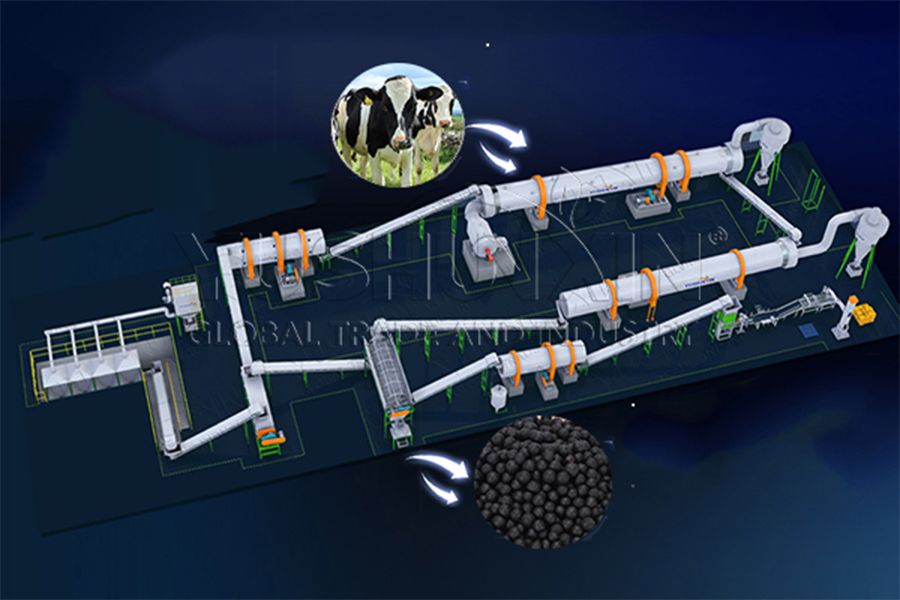
3. Operation & Technical Requirements
- Small Plants:
- Lower automation, can be manually operated
- Suitable for beginners, low maintenance
- Large Plants:
- High-tech systems with automated controls
- Requires technical team and quality monitoring
4. Profitability and Scalability
- Small-scale plants usually achieve break-even within 6–12 months.
- Large-scale setups yield higher margins but have longer ROI periods (1.5–2 years).
- Both setups can scale up with increased demand.
Startup Suggestion: Use small cow dung biofertilizer factories to validate your product-market fit before scaling to a 10 t/h line.
Conclusion
Whether you’re building a farm-based micro-unit or a full-scale factory, the right cow dung biofertilizer plant depends on your goals, budget, and operational capacity. With proper planning, both small and large setups can lead to long-term success.
Welcome to visit: https://www.biofertilizerproduction.com/product/cow-dung-biofertilizer-making-line/