A factory that washes, cuts, and blanches vegetables for frozen or fried products needs a line where each stage hands the product to the next without damage. The automatic vegetable processing line equipment for a large-scale plant joins the washing, the cutting, and the blanching into one flow. This article explains the layout choices that improve the finished quality in a food processing system.
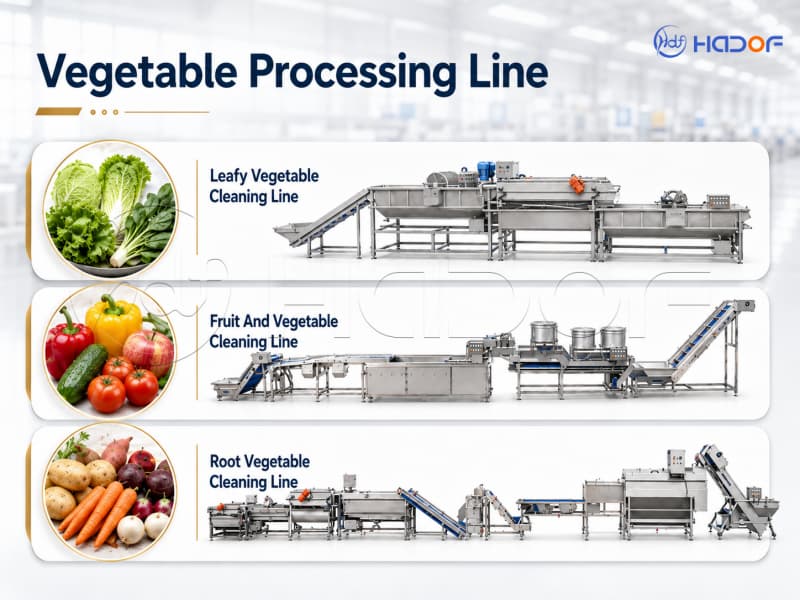
How Should a Factory Arrange the Washing and Cutting Stages in a Vegetable Processing Line?
The washing stage removes the soil before the cutting, and the cutting stage sizes the pieces for the fryer or the freezer. The vegetable preparation line with washing and cutting for food factories keeps these steps in the right order, so a clean surface reaches the blade. A buyer that lists the product size and the soil load first gets a food equipment configuration that fits the crop. This order protects the food manufacturing yield.
Which Product Types Benefit From an Automatic Vegetable Processing System?
Potatoes, carrots, onions, leafy greens, and mixed pieces all pass through the same line with different settings. The integrated vegetable processing system for fried and frozen products adjusts the cutter and the blancher to the product shape. A plant that groups the vegetables by hardness avoids the bruising and the uneven cuts that a rough line would cause. This flexibility keeps the food production line ready for several recipes.
How Does the Processing Line Connect With the Vegetable Blancher?
After the cutting, the pieces move to the vegetable blanching machine for a processing line and then to the cooling or the freezing stage. A short transfer keeps the temperature steady and stops the over-blanching that a wait would cause. This connection turns the separate machines into one complete food processing system. A clear flow also keeps the pieces separate for the pack.
How Should a Factory Verify the Processing Line Before the Purchase?
Vegetable processing depends on the product shape and the water, so the buyer runs a trial with the plant’s own produce. You can review the vegetable processing line manufacturer to confirm the washers, the cutters, and the blancher. A measured run shows the yield and the finished size before the investment. This check turns the food equipment decision into a dependable quality choice.
How Does a Smooth Transfer Improve Finished Quality in Food Preparation?
A smooth transfer keeps each piece moving at the same speed, so the product does not stack or bruise between the stages. This steady flow lowers the rejects and the rework that a rough handoff would cause. A producer who counts this gain sees the line as a food machinery asset that protects both the product and the schedule. This detail keeps the food preparation result even from the wash to the pack.
Conclusion
A factory optimizes an automatic vegetable processing line when the washing, the cutting, and the blanching match the product and the flow. These choices keep the pieces clean, even, and ready for the next stage. If you have interests, you can learn more about https://www.friedfoodsolutions.com/vegetables-processing-line/