The fertilizer industry increasingly focuses on sustainable raw materials and efficient moisture reduction processes. Pomace, a by-product from fruit juice, wine, and oil extraction, contains high levels of organic matter and moisture, usually above 90%. If not properly treated, high-moisture pomace causes storage, transportation, and odor problems. Dehydration technology transforms such waste into valuable organic fertilizer raw materials. Through a professional drying process, companies convert wet pomace into stable and nutrient-rich fertilizer inputs. This transformation not only increases the value of organic residues but also boosts fertilizer market sales by improving product quality and reducing production costs.
1. What Types of High-Moisture Raw Materials Benefit from Dehydration Technology?
Many industries generate organic residues suitable for fertilizer production. Fruit juice factories produce apple pomace, grape pomace, and citrus pomace; edible oil plants discharge olive pomace and soybean residues; breweries generate grain dregs with similar moisture content. Each material contains abundant fiber, minerals, and trace nutrients but also more than 85–90% water. The fertilizer manufacturing industry requires materials with controlled and consistent moisture content for stable composting and efficient granulation.
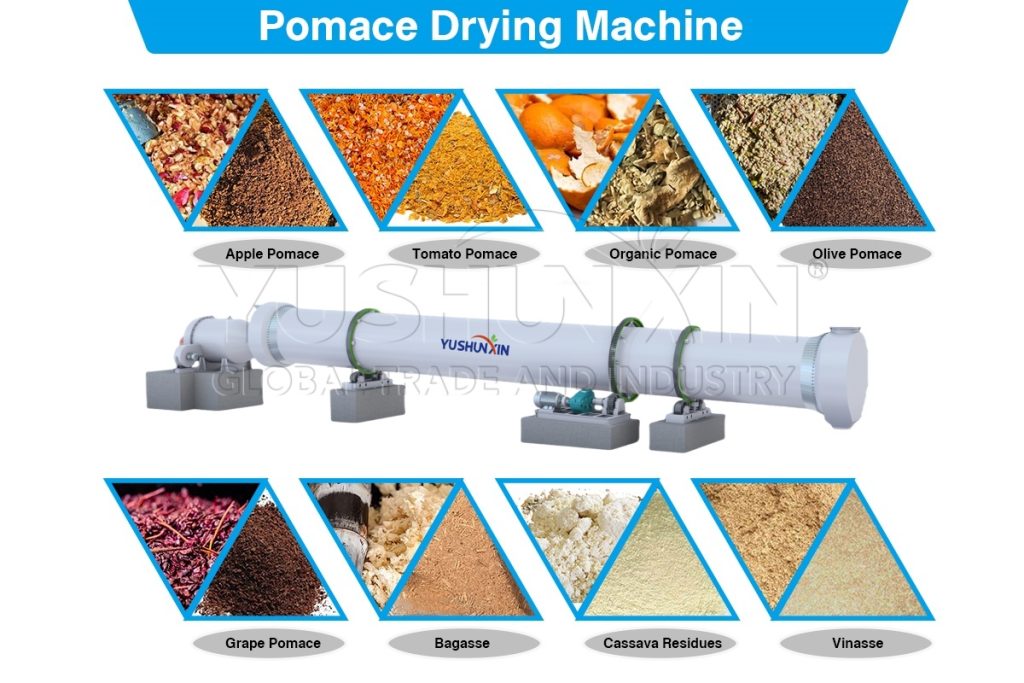
By applying pomace dehydration and drying technology, the moisture level can be reduced step by step—from more than 90% down to below 10%. Dehydration improves storage life, while drying enhances fermentation efficiency during the compost process. Processing industries also benefit from lower transportation costs and cleaner production environments. Therefore, both agricultural and environmental sectors view pomace drying and dewatering as an essential stage in fertilizer raw material preparation.
2. How Does Pomace Dryer Equipment Optimize the Water Reduction Process?
Pomace dryers represent the core machinery in the organic fertilizer production line. The machine design focuses on progressive water removal and stable heat transfer. The pomace dryer system typically includes four main stages: mechanical dewatering, thermal drying, composting, and wet granulation. The first stage uses a dewatering machine to remove free water mechanically. The second stage applies controlled heat air flow inside the dryer to achieve moisture reduction to around 30%. The third stage, composting, further stabilizes organic matter and produces uniform texture. The final stage involves a wet granulator or pelletizer, which shapes composted material into granules or pellets.
A modern pomace drying line integrates intelligent temperature control, adjustable air volume, and energy recovery systems. These features ensure continuous operation, low energy consumption, and high drying efficiency. Through systematic dehydration, the production line not only improves the physical properties of fertilizer granules but also guarantees consistent particle size and nutrient retention. Consequently, the pomace dryer becomes the key equipment for water removal and product quality enhancement across the fertilizer industry.
3. Why Does Efficient Moisture Control Increase Fertilizer Market Competitiveness?
Stable moisture content directly influences fertilizer quality, appearance, and shelf life. When producers adopt advanced pomace dehydration technology, the final granules exhibit lower microbial activity, smoother surface, and better mechanical strength during packaging and transportation. Consistent drying and granulation processes enable manufacturers to meet different market standards — from bulk organic compost granules to fine pellet fertilizers used in horticulture or large-scale agriculture.
Furthermore, moisture control reduces waste volume and improves nutrient concentration, which increases the selling price of the final product. Fertilizer distributors prefer uniform, easy-to-spread granules with good storage stability. Manufacturers who invest in efficient pomace drying and dewatering machinery gain a clear advantage in cost savings, product differentiation, and brand reputation. Continuous water reduction technology therefore becomes a direct driver of fertilizer market growth.
Conclusion
Pomace dehydration technology connects environmental management with fertilizer manufacturing. Through mechanical dewatering, composting, thermal drying, and granulation, industries convert wet organic residues into high-value fertilizer particles. This transformation supports both sustainability and profitability. As the demand for eco-friendly fertilizers grows, professional equipment such as the pomace dryer provides reliable performance and consistent results.
A professional drying equipment manufacturer—Yushunxin—offers advanced pomace dryer machinery and integrated organic fertilizer production systems. Its equipment design focuses on efficient moisture reduction, flexible process control, and energy-saving operation, helping fertilizer producers achieve higher product quality and stronger market competitiveness. Through continuous innovation in dehydration and drying technology, pomace-based fertilizer production will continue to expand its role in the global green economy. You can visit: https://www.fertilizerdryer.com/pomace-drying-machine/