In the modern fertilizer production industry, high‐moisture organic waste such as fruit pomace, vegetable residues, distillers’ grains, and biogas slurry creates both challenges and opportunities. Each type of raw material contains valuable nutrients suitable for organic fertilizer manufacturing, yet the high initial moisture content—often above 85%—limits storage stability and granulation efficiency. Many industries including food processing, beverage, and bioenergy sectors now focus on efficient pomace moisture reduction processes to improve fertilizer quality, stability, and cost‐effectiveness. The trend toward energy‐saving drying technologies and continuous production systems defines the current stage of innovation in pomace fertilizer production.
Section 1: What Kinds of Organic Raw Materials Require Advanced Moisture Reduction Systems?
Fruit pomace from apples, grapes, citrus, and berries often contains over 90% water. The food processing industry faces disposal costs if this high‐moisture waste remains untreated, while fertilizer producers view it as a valuable organic resource. Vegetable pomace and corn distillers’ residues also exhibit similar characteristics, requiring careful dewatering and drying before composting or granulation. In fertilizer production procedures, each material type has different physical and chemical features. For example, grape pomace offers high organic carbon but needs precise dehydration to prevent fermentation during storage. Citrus pomace contains oils and fiber, which demand a uniform drying process to achieve stable granule formation. These materials, once properly dried and composted, can transform into nutrient‐rich particles for organic fertilizer markets. Therefore, efficient pomace moisture reduction technologies support multiple industries seeking sustainable raw material utilization.
Section 2: How Do Modern Machines Improve Pomace Water Reduction Efficiency?
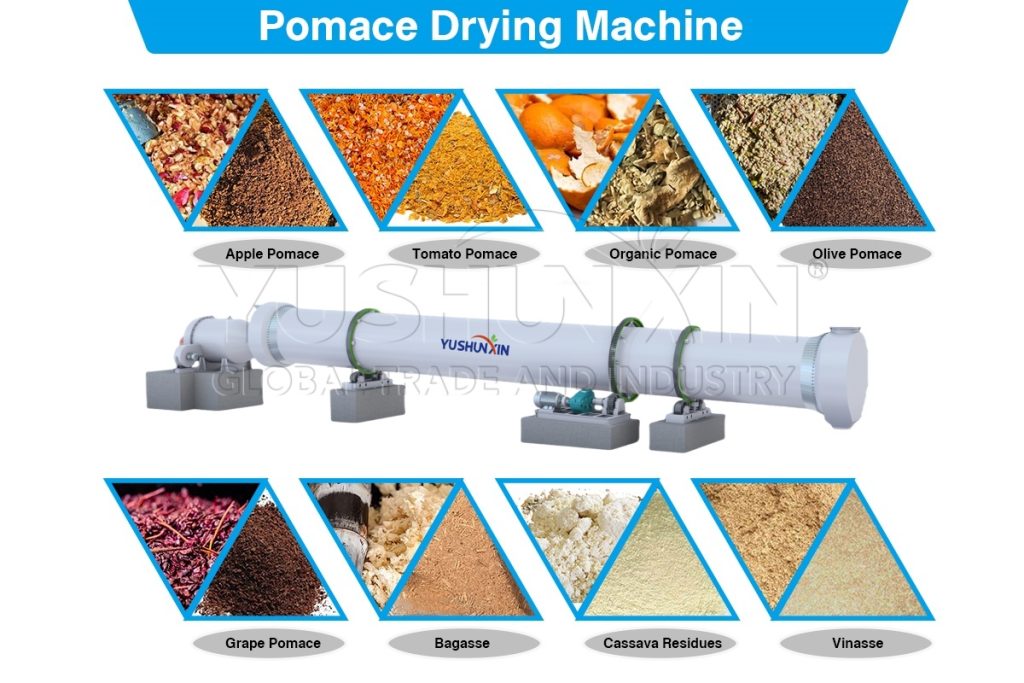
Recent developments in drying equipment reveal several technological upgrades for pomace fertilizer production. The most remarkable progress appears in rotary drum dryers, which combine thermal conduction and airflow design to achieve controlled moisture reduction. This machine allows continuous feeding, stable temperature regulation, and uniform drying of pomace materials. The rotary drum dryer shortens drying time, increases heat exchange efficiency, and reduces energy consumption compared with traditional static dryers. After initial dewatering through mechanical devices such as a screw press or centrifugal dehydrator, pomace can move to the rotary drum dryer for secondary drying. The moisture content gradually decreases from above 80% to around 30%, preparing the materials for composting or pelletizing stages. In addition, the integration of automatic control systems and dust recovery features ensures environmental compliance and consistent fertilizer production quality. Through these modern drying technologies, producers maintain product uniformity and improve granulation performance in later stages.
Section 3: What Combined Processes Lead to Optimal Pomace Granule Formation?
A complete pomace fertilizer production process includes four main water reduction phases: mechanical dewatering, thermal drying, composting, and wet granulation. The first stage uses dewatering machines to reduce initial moisture; the second relies on a rotary drum dryer for thorough dehydration; the third involves controlled composting where biological heat continues drying and stabilizes organic matter; the final stage uses a wet granulator or pelletizer to form uniform fertilizer particles. Throughout these procedures, precise moisture management remains crucial. Excess moisture may hinder granule strength, while insufficient moisture can reduce binding performance during pellet making. Many fertilizer producers now install continuous monitoring systems within the drying and granulating equipment to ensure stable product quality. Each integrated machine system cooperates to turn wet pomace into high‐value organic fertilizer granules with moisture below 10%. The combination of mechanical, thermal, and biological processes represents the latest technological direction for sustainable pomace fertilizer manufacturing.
Conclusion
The trend toward advanced pomace moisture reduction techniques highlights the fertilizer industry’s emphasis on resource recovery and cost control. By coordinating multiple stages—dewatering, drying, composting, and granulation—manufacturers can transform wet fruit pomace and similar organic wastes into stable, high‐quality fertilizer particles. The rotary drum dryer remains the core equipment because it ensures consistent moisture control and production efficiency. Through the continuous improvement of drying systems and process design, producers can achieve better environmental outcomes and higher profitability. A professional drying equipment manufacturer—Yushunxin—provides reliable rotary drum dryers and integrated moisture reduction machinery, supporting global clients in developing efficient pomace fertilizer production lines for sustainable growth. You can visit: https://www.fertilizerdryer.com/pomace-drying-machine/